
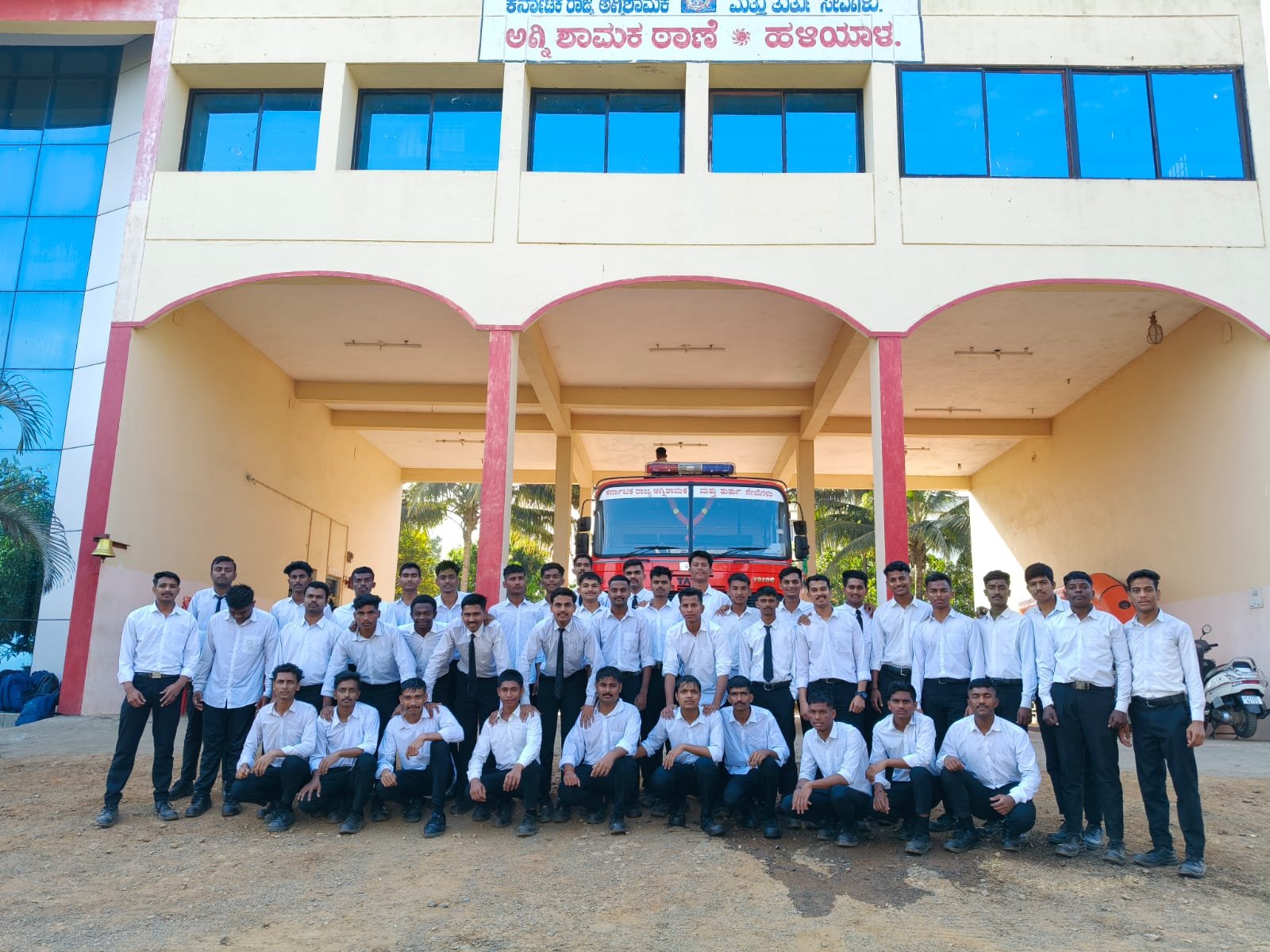
Fire Safety and Industrial Safety: Students Gain Hands-On Experience Through Practical Classes
In today’s rapidly industrializing world, the importance of fire safety and industrial safety education cannot be overstated. Industrial environments are inherently associated with various hazards, including fire outbreaks, mechanical failures, electrical faults, chemical exposure, and human error. While theoretical knowledge provides a foundational understanding of safety principles, it is the integration of practical training that truly equips students with the skills required to respond effectively to real-life emergencies.
Recognizing the need for experiential learning, students participated in structured practical fire safety and industrial safety training sessions designed to bridge the gap between theoretical instruction and real-world application. These practical classes aimed to enhance awareness, develop competence, and foster a safety-first mindset among students preparing to enter industrial and technical fields.
Significance of Fire Safety and Industrial Safety Education
Fire safety and industrial safety are fundamental disciplines within occupational health and safety management. Fires in industrial settings can result in loss of life, severe injuries, environmental damage, and substantial economic losses. Similarly, industrial accidents caused by unsafe machinery operation, inadequate protective equipment, or lack of hazard awareness pose serious risks to workers and organizations alike.
Academic instruction alone is insufficient to prepare students for the complexity of safety challenges faced in industrial environments. Practical training plays a critical role in:
- Reinforcing theoretical concepts through direct application
- Developing situational awareness and decision-making skills
- Improving reaction time during emergencies
- Encouraging compliance with safety regulations and standards
The practical classes attended by students were structured to meet these objectives while aligning with established safety guidelines and best practices.
Overview of the Practical Training Program
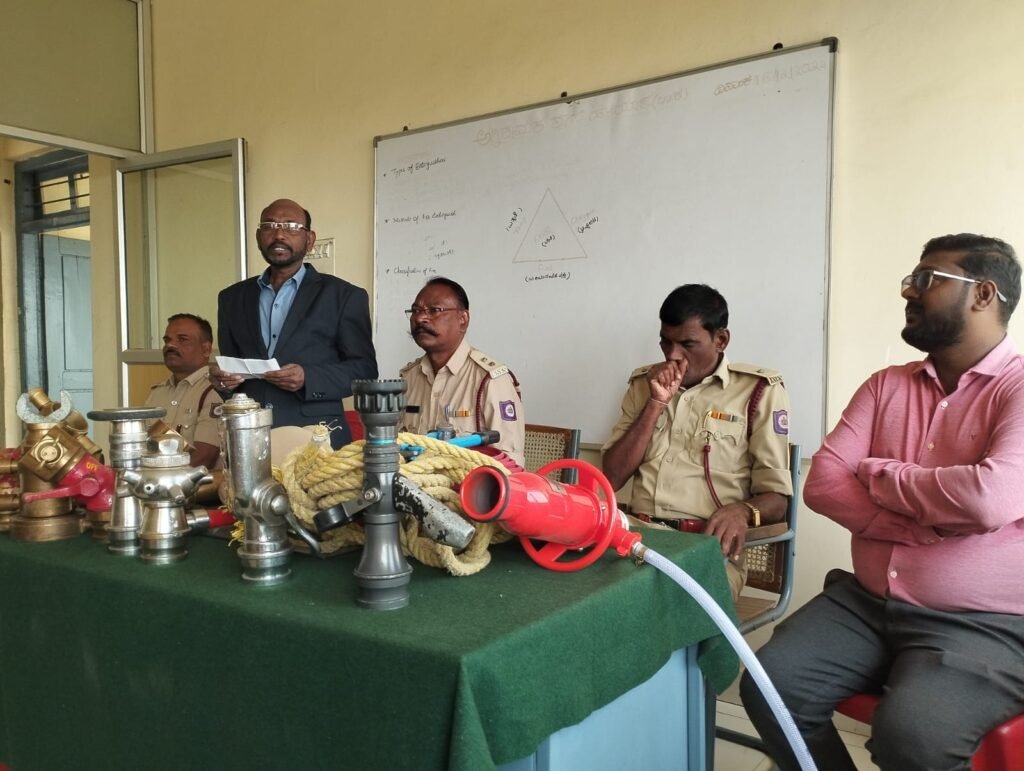
The practical training program was systematically designed to cover both fire safety and industrial safety components. Qualified instructors and safety professionals conducted the sessions, ensuring that students received accurate technical guidance and industry-relevant exposure.
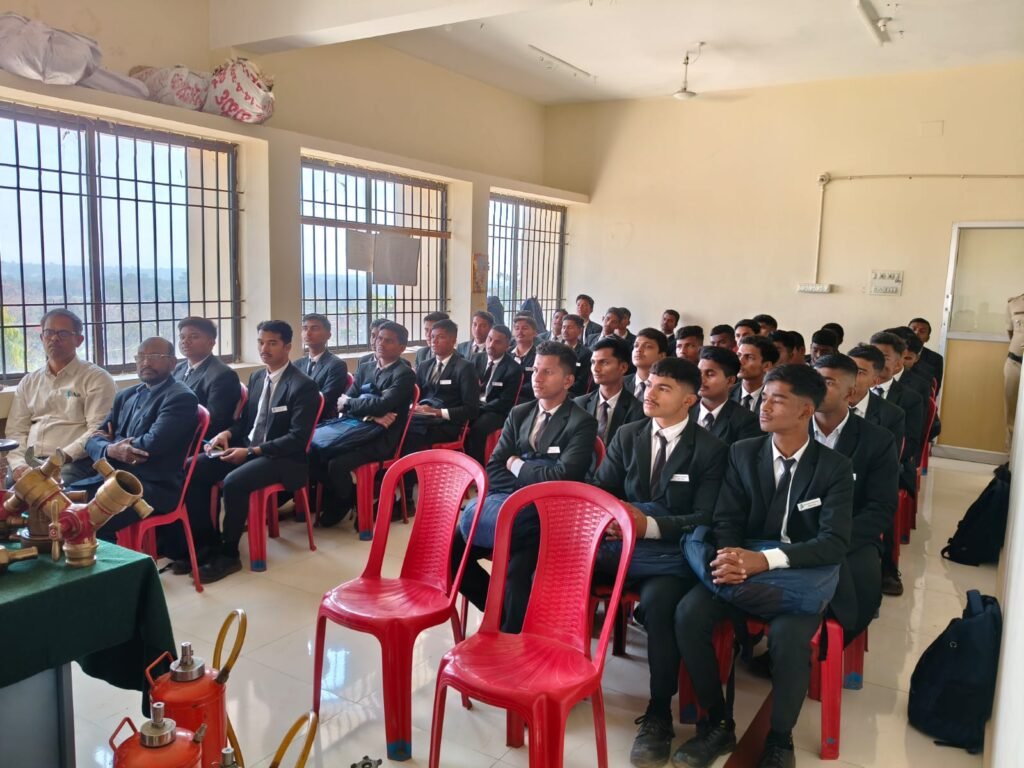
The program combined demonstrations, supervised hands-on activities, scenario-based learning, and interactive discussions. This approach enabled students to actively engage with the subject matter and apply safety measures in controlled yet realistic environments.
Fire Safety Practical Training
Understanding Fire Hazards and Fire Behavior
As part of the fire safety practical classes, students were introduced to the fundamental science of fire, including:
- The fire triangle and fire tetrahedron
- Common causes of industrial fires
- Fire propagation and heat transfer mechanisms
Understanding fire behavior allowed students to appreciate the importance of early detection and immediate response in minimizing damage.
Classification of Fires and Fire Extinguishers
Students were trained to identify various classes of fires, such as:
- Class A: Ordinary combustible materials
- Class B: Flammable liquids
- Class C: Electrical fires
- Class D: Metal fires
Correspondingly, students learned about different types of fire extinguishers, including water, foam, dry powder, carbon dioxide, and specialized extinguishing agents. Emphasis was placed on selecting the appropriate extinguisher for each fire class.
Hands-On Use of Fire Extinguishers
A key component of the training involved hands-on operation of fire extinguishers. Under expert supervision, students practiced:
- The correct handling and activation of extinguishers
- The PASS technique (Pull, Aim, Squeeze, Sweep)
- Maintaining a safe distance and exit awareness
These exercises enabled students to overcome hesitation and build confidence in responding to fire emergencies.
Emergency Evacuation and Response Procedures
The training also covered fire evacuation protocols, including:
- Emergency alarm systems
- Evacuation routes and assembly points
- Roles and responsibilities during evacuation
- Basic fire emergency communication
Students gained practical insight into coordinated evacuation procedures, emphasizing discipline, calmness, and teamwork during emergencies.

Industrial Safety Practical Training
Identification of Workplace Hazards
Industrial safety training focused on identifying potential hazards commonly found in industrial and manufacturing environments. Students were trained to recognize:
- Mechanical hazards associated with moving machinery
- Electrical hazards and unsafe wiring practices
- Chemical hazards and improper storage
- Slips, trips, and fall risks
Hazard identification exercises encouraged students to think critically and proactively assess their surroundings.
Personal Protective Equipment (PPE)
A significant portion of the industrial safety practicals was dedicated to the proper use of Personal Protective Equipment. Students learned about:
- Types of PPE such as helmets, gloves, safety shoes, goggles, ear protection, and respiratory equipment
- Correct methods of wearing, adjusting, and maintaining PPE
- Limitations of PPE and the importance of combining PPE with engineering and administrative controls
Hands-on demonstrations ensured students understood that PPE is a critical line of defense, not a substitute for safe work practices.
Safe Operation of Tools and Machinery
Students were introduced to standard safety procedures for operating industrial tools and machinery. The training emphasized:
- Pre-operation safety checks
- Lockout and tagout principles
- Safe handling techniques
- Awareness of safety guards and emergency stop mechanisms
Through practical observation and guided activities, students learned the importance of adherence to operating instructions and safety protocols.
Safety Signage and Regulatory Compliance
Industrial safety signage and symbols were explained in detail, highlighting their role in hazard communication. Students were educated on:
- Warning, mandatory, prohibition, and emergency signs
- Color coding and standard safety symbols
- The importance of compliance with occupational safety regulations
This component reinforced the role of safety standards and legal frameworks in maintaining safe workplaces.

Educational and Professional Benefits for Students
Participation in practical fire safety and industrial safety training provides students with numerous academic and professional advantages, including:
- Enhanced understanding of workplace safety principles
- Development of practical skills applicable to industrial environments
- Increased confidence in handling emergency situations
- Improved employability and industry readiness
- Cultivation of a responsible and safety-oriented professional attitude
Such training prepares students not only to protect themselves but also to contribute positively to organizational safety culture.
Conclusion
The practical fire safety and industrial safety classes attended by students represent a vital component of holistic safety education. By integrating theoretical knowledge with experiential learning, these training sessions effectively prepare students to face real-world industrial challenges. The hands-on exposure gained through practical exercises fosters awareness, competence, and accountability—qualities essential for ensuring safety in modern industrial environments.
Continued emphasis on practical safety training within academic curricula will play a significant role in developing skilled, safety-conscious professionals capable of minimizing risks, preventing accidents, and promoting a culture of safety across industries.
Contact Prestige Institute Dharwad
- Address: 2nd Floor, Akalwadi Complex, Near Toll Naka, Opp. Modern Hall, PB Road, Dharwad – 580004, Karnataka
- Phone: +91 90364 42221, +91 73491 59198
- Email: prestigeinstitutedharwad@gmail.com, admin@prestigeinstitutedharwad.in


